
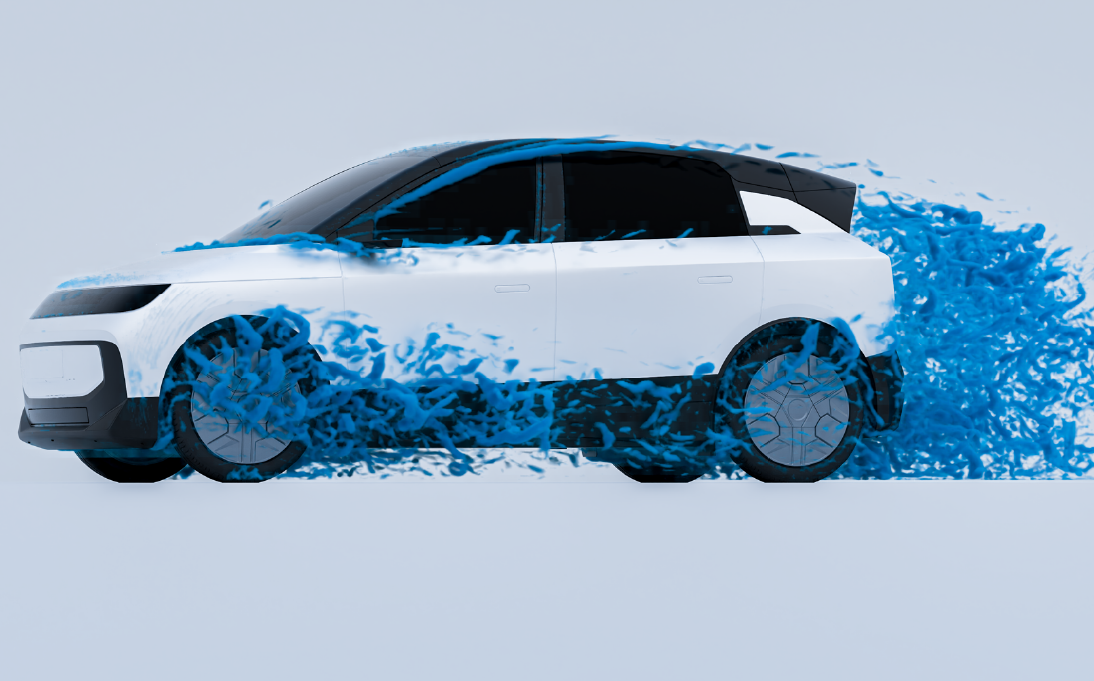
As battery electric vehicles (BEVs) continue to evolve, automotive manufacturers face a fundamental engineering challenge: how to improve range, charging performance and sustainability without relying solely on larger battery packs.
For many years, increasing battery capacity provided a straightforward route to extending vehicle range. However, larger batteries introduce additional mass, higher material consumption and increased lifecycle emissions. As the industry seeks more efficient solutions, attention is increasingly turning toward vehicle lightweighting, thermal management and aerodynamic optimisation.
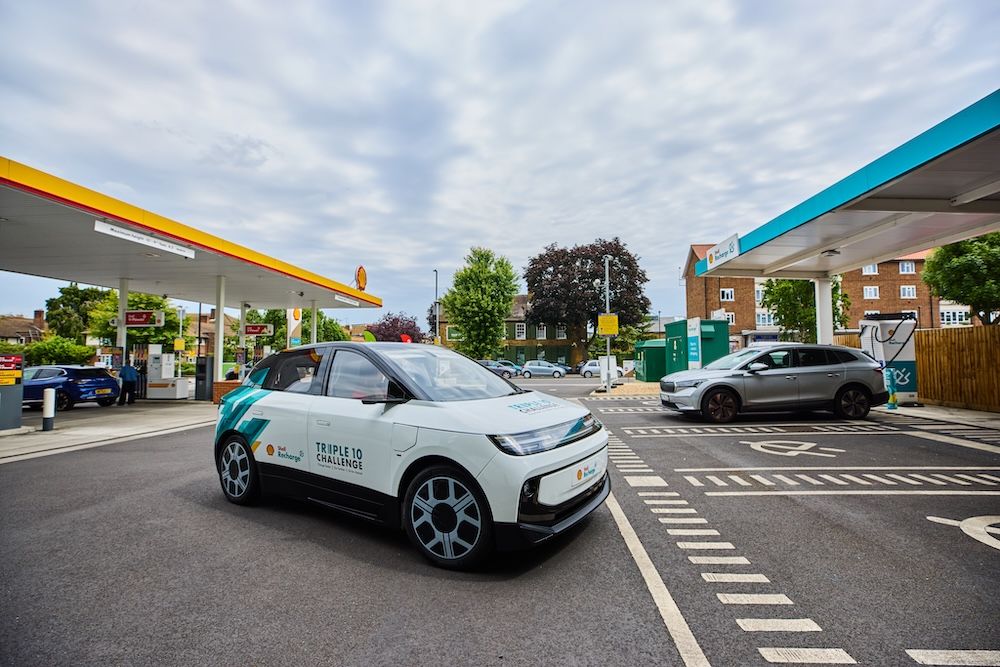
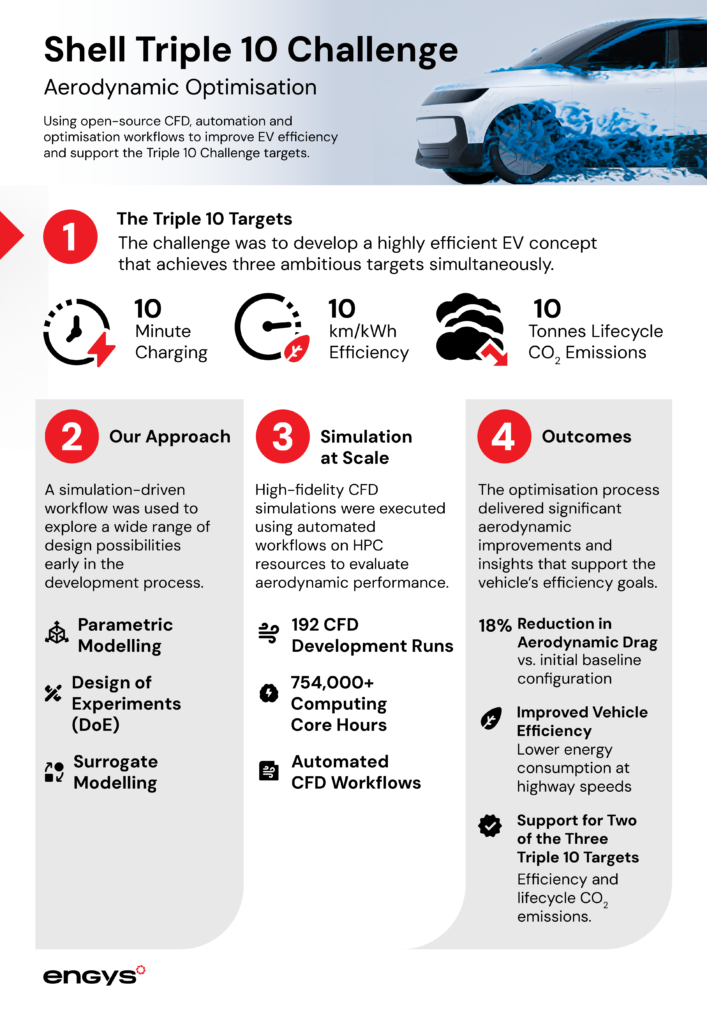
This challenge sits at the heart of the Shell Triple 10 Challenge, a concept vehicle programme led by Shell and a consortium of engineering partners, including ENGYS. The programme was designed to explore how existing technologies and simulation-led engineering could be combined to create a more efficient and sustainable electric vehicle while achieving three ambitious targets simultaneously:
- 10-minute charging
- 10 km/kWh efficiency
- 10 tonnes of lifecycle CO₂ emissions
Achieving these targets required contributions from multiple engineering disciplines. While innovations in battery technology and thermal management enabled the rapid charging objective, ENGYS supported the programme through aerodynamic development and optimisation, helping improve vehicle efficiency through simulation-driven design decisions and large-scale CFD analysis.
Why Aerodynamics Matters for EV Efficiency
For electric vehicles, aerodynamic drag plays a critical role in determining overall energy consumption. While battery technology often receives the most attention, aerodynamic resistance becomes one of the dominant energy losses at highway speeds. Reducing drag directly lowers the energy required to maintain speed, increasing efficiency and extending driving range.
As discussed during the development programme, aerodynamic losses can account for more than half of the energy consumption equation at higher vehicle speeds. This makes aerodynamics a critical contributor to vehicle efficiency targets and overall sustainability objectives.
💡Engineering Insight
At highway speeds, aerodynamic drag can account for more than 50% of the total energy losses experienced by an electric vehicle, making aerodynamic optimisation one of the most effective ways to improve efficiency and extend driving range.
Within the Shell Triple 10 Challenge, aerodynamic performance was directly linked to two of the programme’s three headline targets:
- achieving 10 km/kWh efficiency
- reducing lifecycle CO₂ emissions
While ENGYS was not directly involved in the immersive battery cooling technology that enabled rapid charging, aerodynamic optimisation played a significant role in helping support the wider efficiency objectives of the vehicle.
Engineers from ENGYS played a central role in the aerodynamic development programme. Reflecting on the project, Angus Lock, General Manager, ENGYS North America, and Phil Tiller, Senior CFD Engineer at ENGYS UK, highlighted both the importance of aerodynamics and the simulation-driven workflow used to support the vehicle’s development.
Angus Lock said:
“The 10-minute charging target wasn’t really our area, but aerodynamics is critical to the other two targets. The efficiency target and the lifecycle CO₂ target are both heavily influenced by aerodynamic performance.”
Phil Tiller said:
“The aerodynamic challenge wasn’t simply about reducing drag. We needed to understand how different geometric parameters interacted with one another and use simulation to identify the combinations that delivered the greatest overall benefit.”
ENGYS has explored similar aerodynamic drag reduction challenges in other transportation applications, including the development of one of the industry’s most aerodynamically efficient travel trailers, where CFD was used to optimise external airflow and minimise energy losses.
CFD-Driven Vehicle Development from the Start
One of the most interesting aspects of the project was how early CFD was integrated into the vehicle development process. Rather than validating an almost-final design, simulation was used while the vehicle geometry still had significant design freedom. This allowed aerodynamic considerations to influence the development process from an early stage rather than becoming a late-stage optimisation exercise.
ENGYS developed a parametric optimisation workflow that allowed the team to explore a broad aerodynamic design space while maintaining realistic vehicle proportions and packaging requirements.
The approach focused on approximately twelve geometric parameters, including:
- windscreen angle
- roof profile
- rear roof angle
- diffuser angle
- rear overhang dimensions
- boat-tail geometry
Using Blender-based morphing workflows, these parameters could be varied automatically to generate large numbers of realistic design alternatives.
Exploring the Design Space
The number of possible vehicle combinations quickly becomes enormous when multiple design parameters are involved. Rather than evaluating every possible variation, ENGYS used a Design of Experiments (DoE) methodology based on Latin Hypercube sampling to identify a representative set of design candidates.
The process reduced a potentially vast design space to 78 CFD simulations that could effectively capture the behaviour of the full optimisation problem. Each design variation was automatically generated, meshed and simulated before being analysed using kriging-based response surface methods.
This approach allowed the engineering team to understand:
- which parameters had the greatest impact on drag
- how different parameters interacted with one another
- where the optimum aerodynamic configuration was likely to exist
Phil Tiller, Senior CFD Engineer, ENGYS UK
“The automation workflow allowed us to explore a much larger design space than would have been practical through manual analysis alone.”
The methodology shares similarities with modern data-driven engineering approaches increasingly being adopted across automotive development programmes, where machine learning and advanced optimisation techniques are helping engineers evaluate larger design spaces and make faster design decisions.
Video: Parallel coordinate analysis used to identify the geometric parameters with the greatest influence on aerodynamic drag.
Large-Scale CFD at Automotive Development Speed
The aerodynamic optimisation programme relied on extensive automation and high-performance computing resources.
Across the project, ENGYS performed:
- 192 development simulations
- more than 754,000 computing core hours
- automated geometry generation
- automated post-processing workflows
Because vehicle development decisions needed to be made rapidly, simulation turnaround time was critical. Results generated during the day often needed to be available for review the following morning, allowing designers and aerodynamicists to make informed decisions and continue refining the vehicle.
Automated reporting workflows generated:
- aerodynamic coefficients
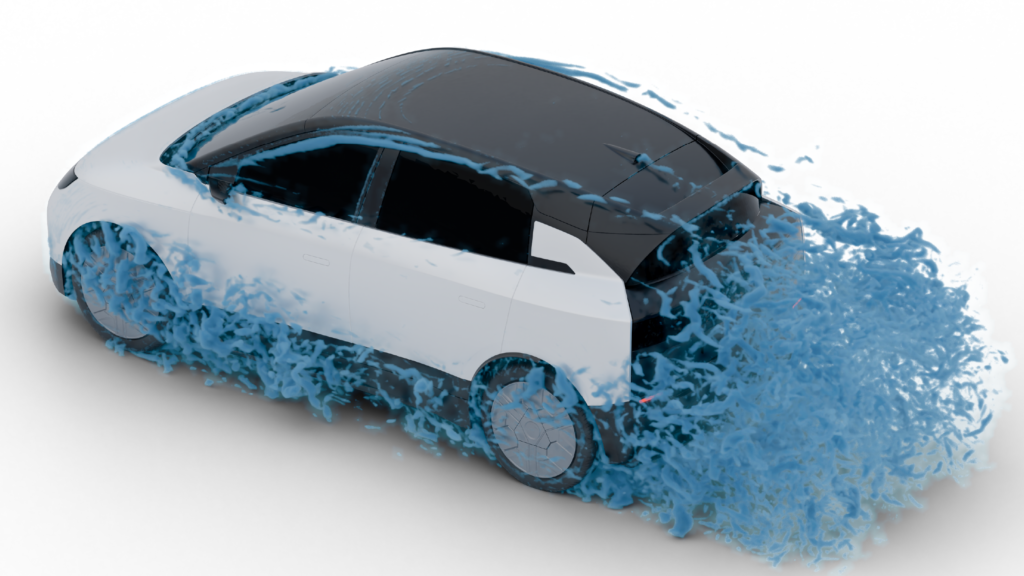
- wake visualisations
- surface pressure distributions
- streamline analysis
- performance comparisons
This enabled large volumes of simulation data to be converted into actionable engineering insights throughout the programme.
The programme also highlights the importance of scalable open-source CFD workflows, allowing engineering teams to perform large optimisation studies while maintaining flexibility, transparency and computational efficiency.
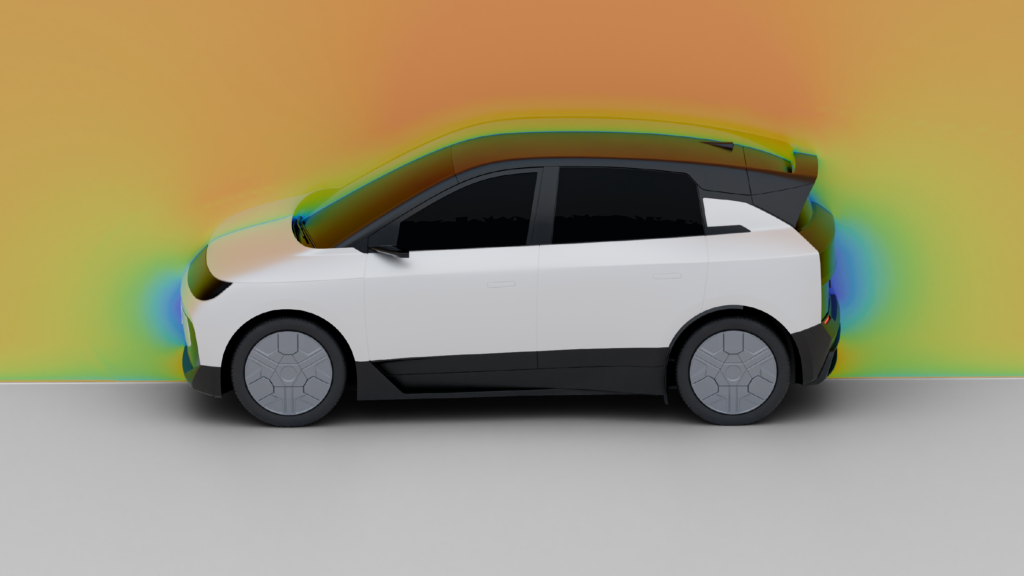
High-fidelity CFD simulation used to evaluate aerodynamic performance across multiple vehicle configurations.
From CFD Results to Vehicle Performance
The final optimised vehicle achieved an 18% reduction in aerodynamic drag compared with the baseline design. This reduction directly supported the wider efficiency objectives of the programme by reducing the energy required to propel the vehicle at speed.
Importantly, the project demonstrated that aerodynamic optimisation is not solely about individual design features such as spoilers or diffusers. Instead, the greatest value came from the overall simulation-led development process itself. By combining parametric modelling, automated CFD workflows and optimisation methodologies, ENGYS was able to support aerodynamic decision-making throughout the programme and help identify the most influential design variables.
Angus Lock, General Manager, ENGYS North America
“The most interesting aspect wasn’t a specific aerodynamic feature. It was the process itself. The ability to use simulation to explore the design space and guide engineering decisions early in development.”
The Future of EV Development
The Shell Triple 10 Challenge reflects a broader trend across the automotive industry. As vehicle programmes become increasingly complex, simulation is evolving from a validation tool into a primary engineering driver. Rather than waiting for physical prototypes or wind tunnel testing, manufacturers can now evaluate thousands of design possibilities virtually and focus engineering effort where it delivers the greatest benefit.
For electric vehicles in particular, this capability is becoming increasingly important as manufacturers seek to balance efficiency, sustainability, performance and development speed. Projects such as the Shell Triple 10 Challenge demonstrate how CFD can contribute not only to aerodynamic analysis, but to the overall vehicle development process itself.
The future of vehicle engineering will increasingly depend on simulation-led workflows that allow teams to make better decisions earlier, reduce development risk and accelerate innovation.
This shift towards simulation-led engineering is already transforming how complex products are developed across multiple industries, enabling organisations to reduce development time and improve engineering decision-making through virtual testing and optimisation.
Explore Automotive CFD with ENGYS
To learn more about how ENGYS supports automotive CFD simulation, aerodynamic optimisation and simulation-led vehicle development, explore our HELYX and ELEMENTS solutions or contact our team to discuss your engineering challenges.

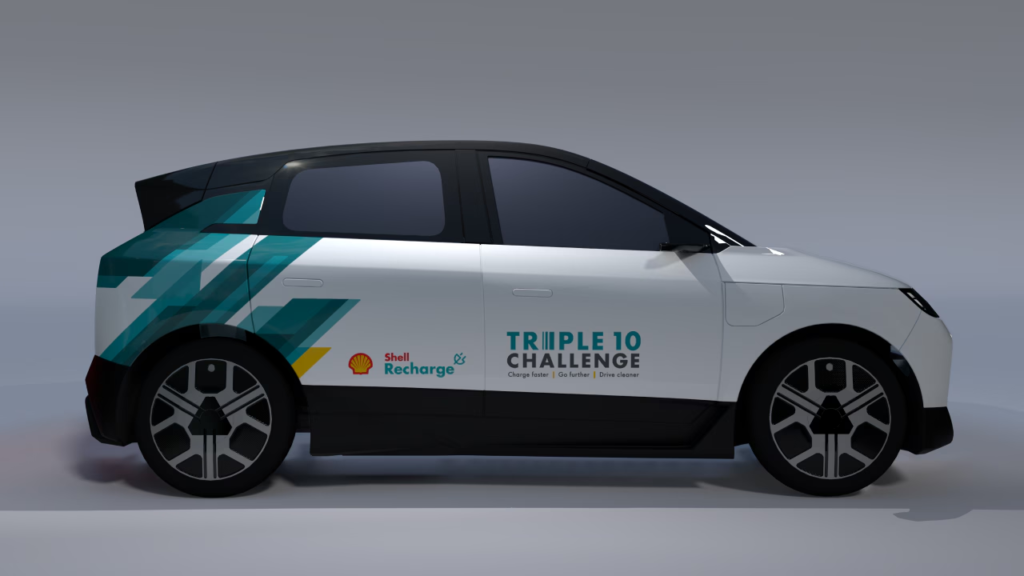
Images of the Shell Triple 10 Challenge concept car courtesy of Shell.