
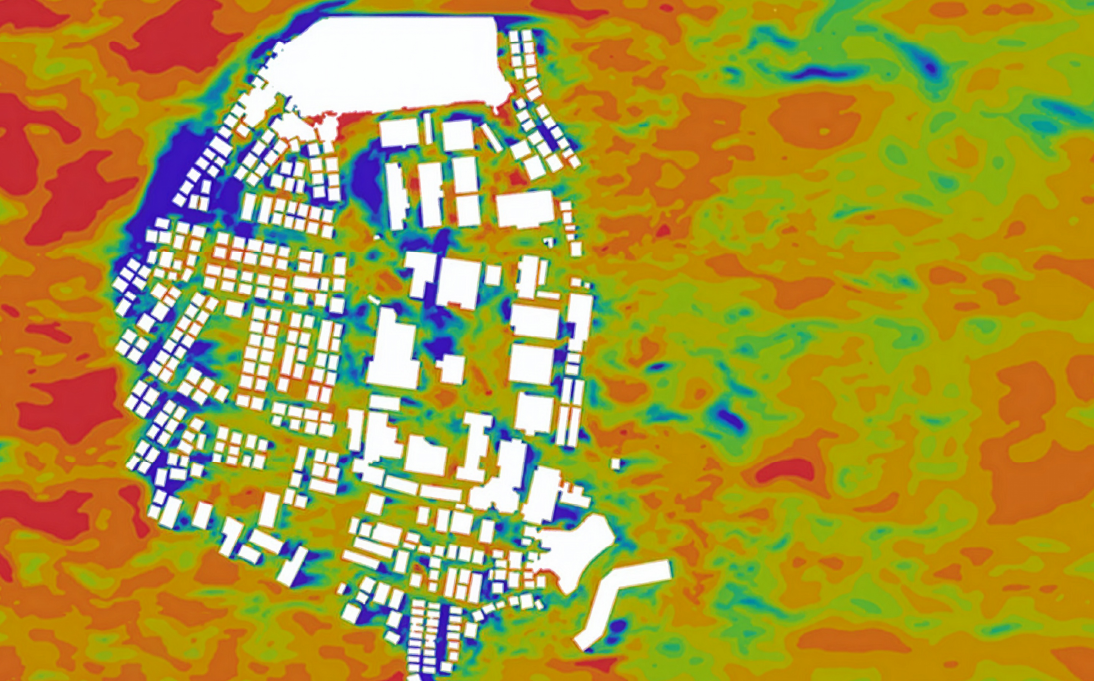
Urban pollutant dispersion CFD simulations are increasingly important for understanding air quality in dense urban environments. There is a critical need for accurate urban air quality simulation. Engineers and researchers rely on advanced CFD methodologies to evaluate pedestrian exposure, airflow behaviour, and contaminant transport around buildings.
This article marks the first in our new HELYX and ELEMENTS Validation Series, where we will demonstrate the accuracy and reliability of our open-source CFD software by comparing simulation results against established academic and industrial benchmarks. Predicting how hazardous pollutant gasses disperse through complex cityscapes is a non-negotiable requirement for modern public safety and environmental risk assessment.
The intricate flow patterns created by buildings, topography, and atmospheric conditions pose a significant challenge for engineers and architects. Reliable simulation of urban pollutant dispersion is essential for emergency response planning, industrial site evaluation, and ensuring regulatory compliance. This study demonstrates the predictive accuracy of ENGYS’ open-source CFD software, HELYX, by validating it against one of the most rigorous academic benchmarks available.
The Architectural Institute of Japan (AIJ) Benchmark Cases: A Gold Standard for Wind Engineering Validation
To prove its mettle, any CFD tool must be tested against high-quality experimental data. For this validation, we selected the AIJ benchmark Test Case M: campus building model with dispersion (TPU), which is widely used in the wind engineering community for its comprehensive and publicly available datasets based on wind tunnel experiments and field measurements.
Understanding the Tokyo Polytechnic University ‘Test Case M’ Setup
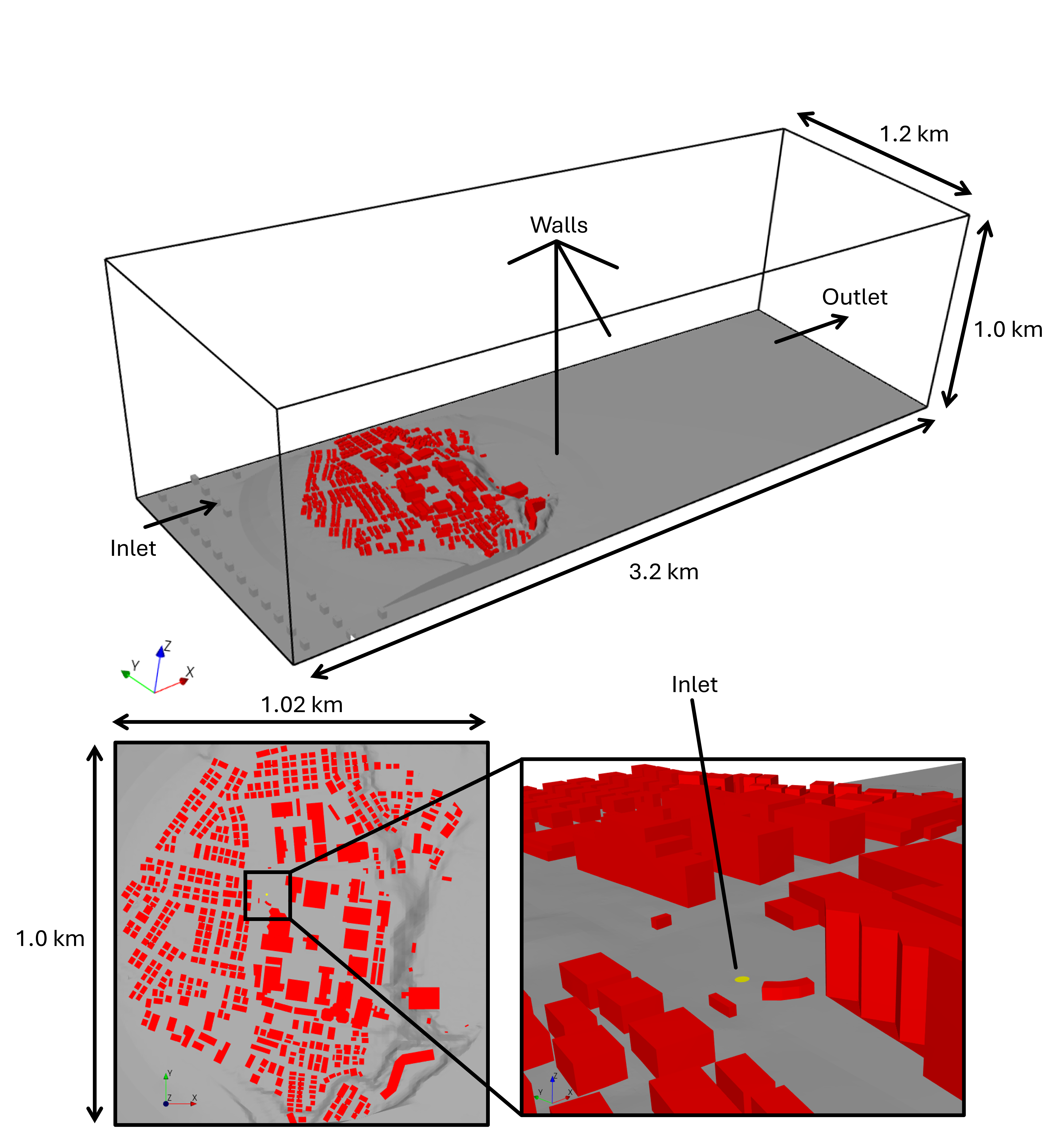
The ‘Test Case M’ from AIJ is an experimental study featuring tracer gas dispersion around the Atsugi campus of Tokyo’s Polytechnic University. Both reduced-scale model (1:600) wind tunnel experiments and outdoor field measurements are available, with this work specifically focussing on replicating the wind tunnel conditions. The geometry is complex, featuring a dense cluster of buildings situated on a 54-meter-high hill. A ground-level source releases ethylene (C2H4) into this environment, and its concentration is measured at 15 distinct points, creating a demanding test case for any CFD simulation software. The objective is to assess HELYX’s ability to accurately track pollutant dispersion patterns subjected to turbulent boundary layers and highly obstructed paths.
Simulating Pollutant Dispersion in HELYX: Methodology
The simulation was configured in HELYX to mirror the reduced-scale wind tunnel experimental conditions as closely as possible. The computational domain extends 3.2 km in the streamwise direction, 1.2 km laterally, and 1.0 km in height, encompassing the full extent of the campus model and surrounding terrain.
Hex-dominant Meshing for Complex Urban Geometries
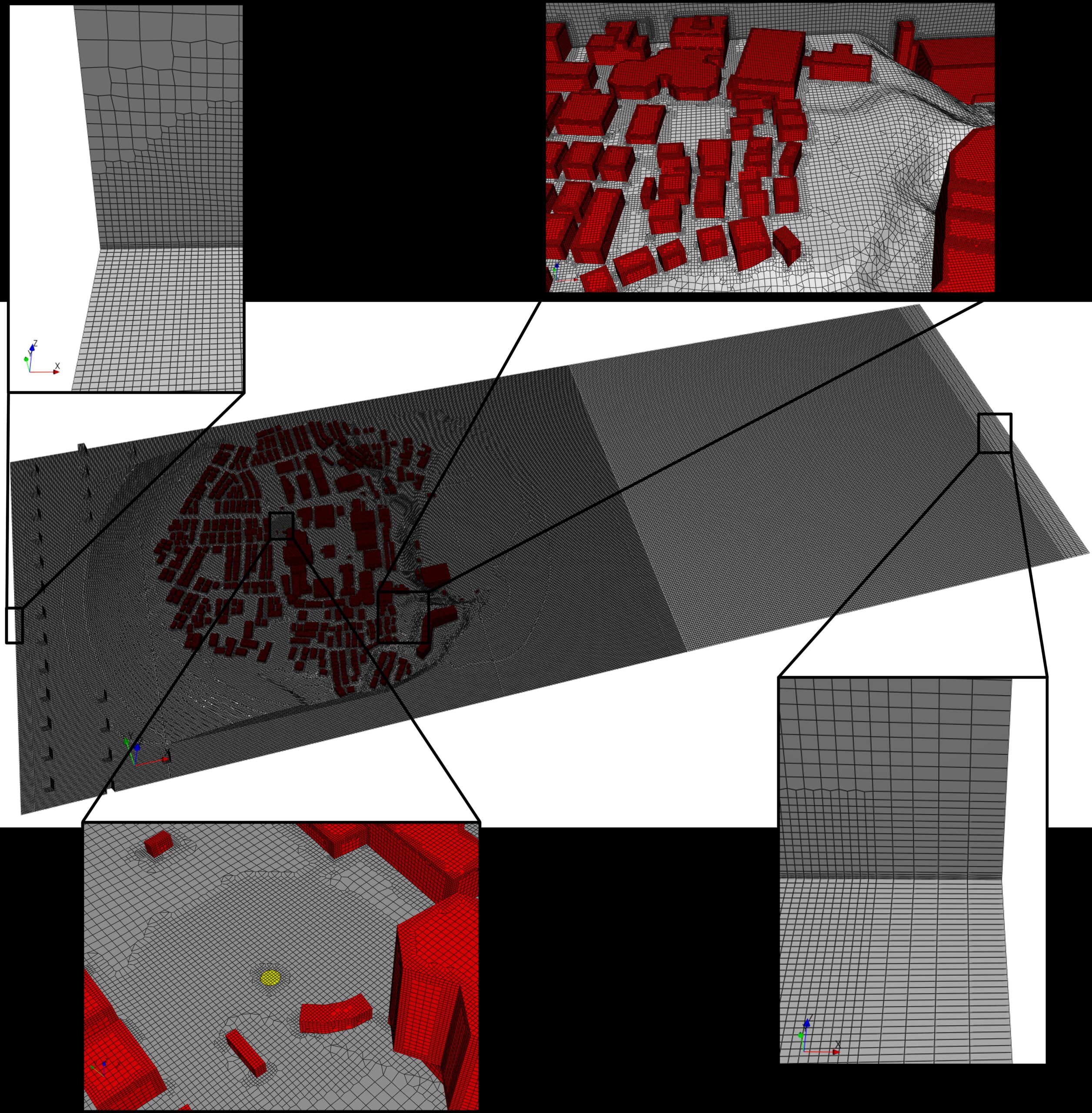
A robust computational grid is the foundation of an accurate CFD simulation. Using HELYX’s automated meshing tools, a high-quality hex-dominant mesh of 13,557,357 cells, optimised for scale resolving large eddy simulation, was generated. To accurately capture near-wall physics, four prism layers were extruded from all building and ground surfaces. This approach leverages advanced hex-dominant mesh generation to efficiently handle the geometric complexity without compromising grid quality.
Solver and LES Model Configuration for High-fidelity Results
The simulation was performed using an implicit pressure-based block-coupled solver designed to enhance convergence and robustness of complex flow solutions, and carried out as transient, incompressible, and isothermal. The dynamic k-Equation Large Eddy Simulation (LES) model was employed to resolve the turbulent structures critical to accurate dispersion modelling. The turbulence kinetic energy SGS model was employed for sub-grid scale turbulence and van Driest function was used for damping the turbulence dissipation rate near the wall. A transport equation was solved for the gas. 60 seconds of physical time were simulated with a time-step of 0.001 s.
Key boundary conditions included:
-
- Inlet: A pre-recorded inflow velocity profile obtained through precursor analysis was specified upstream the wind tunnel testing section.
-
- Outlet: A standard atmospheric pressure outlet was set downstream the urban area at the outlet.
-
- Gas Source: A 6 mm diameter source injected ethylene at a rate of 2.5e-6 m³/s.
-
- Walls: All building and ground surfaces were treated as no-slip walls.
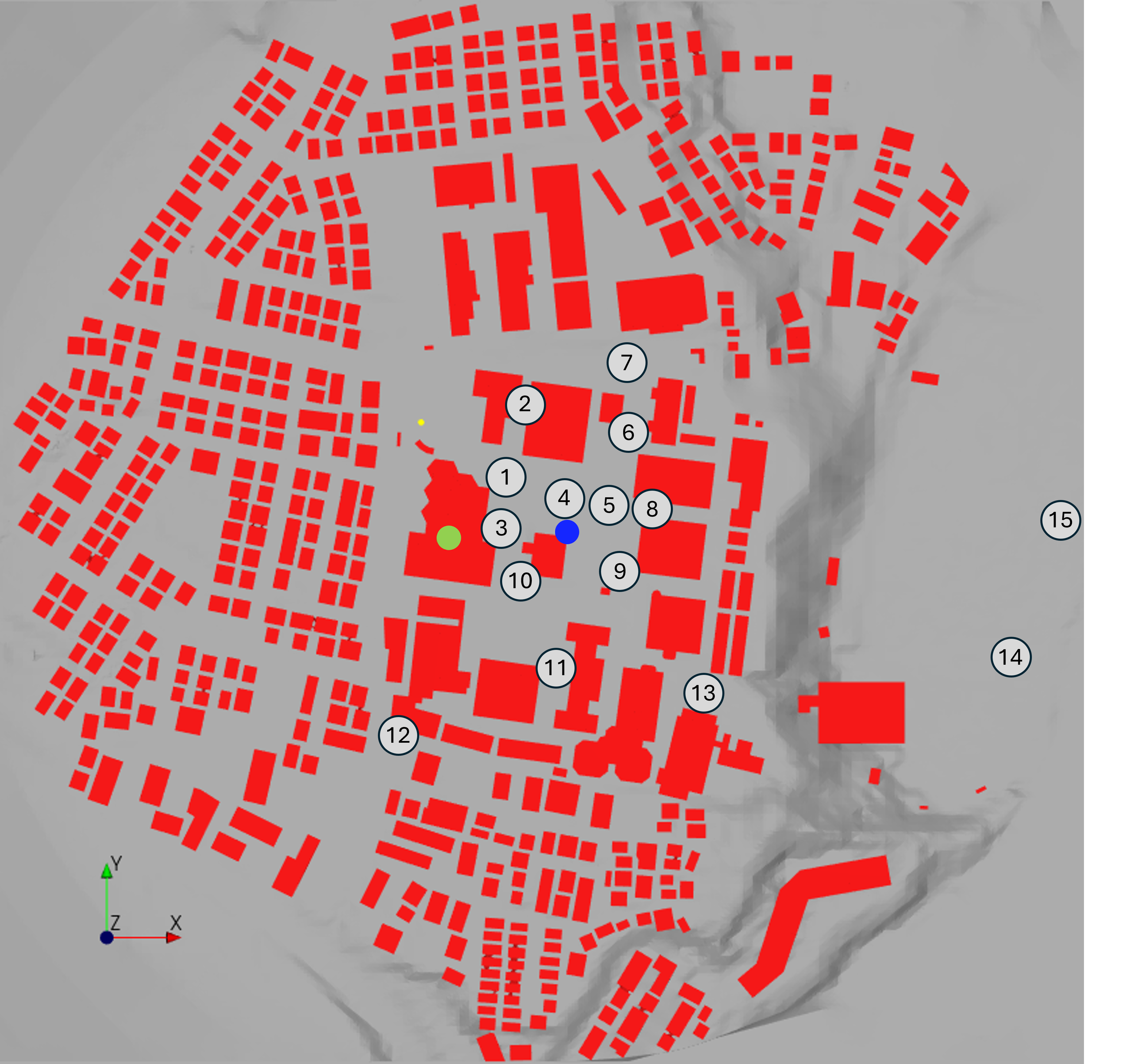
Concentration and velocity data were monitored at 15 probe locations identical to those used in the physical experiment.
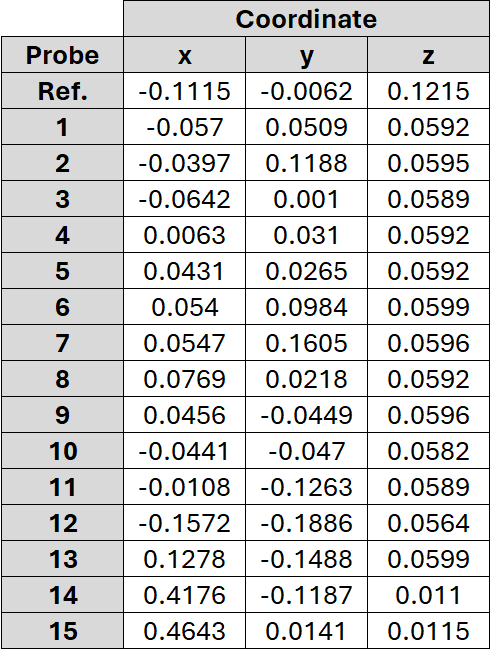
Coordinates of the 15 measurement probes.
Validation Results: Comparing HELYX Simulation to Experimental Data
The transient simulation was run on 256 parallel cores using AMD EPYC 9354 “Genoa” 32-core processors, reaching a total physical time sufficient for statistical analysis in 14 hours. The instantaneous ethylene concentration fields were then time-averaged over a 50-second period to provide stable statistical results for comparison against the experimental measurements.
Accuracy Assessment
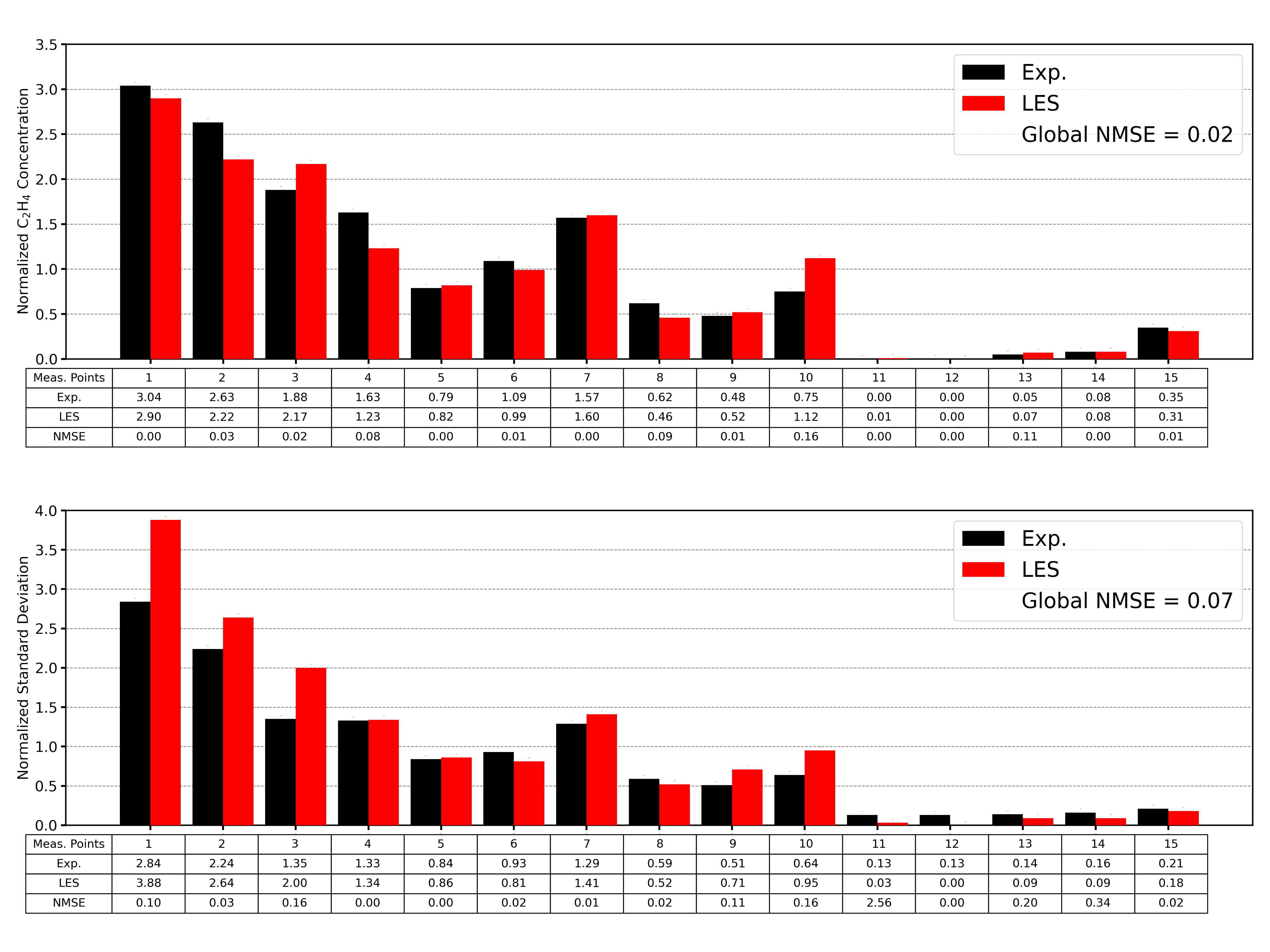
The accuracy of the simulation was quantified using the Normalized Mean Square Error (NMSE), a standard metric in CFD validation. The results show good correlation between the HELYX simulation and the AIJ experimental data.
For the normalized time-averaged concentration, HELYX achieved a Global NMSE of just 0.02, whereas for the normalized standard deviation of concentration, the Global NMSE was 0.07. These low error values across all 15 measurement points confirm the high fidelity of the simulation.
Visualizing Safety: Assessing Concentration Against Critical Thresholds
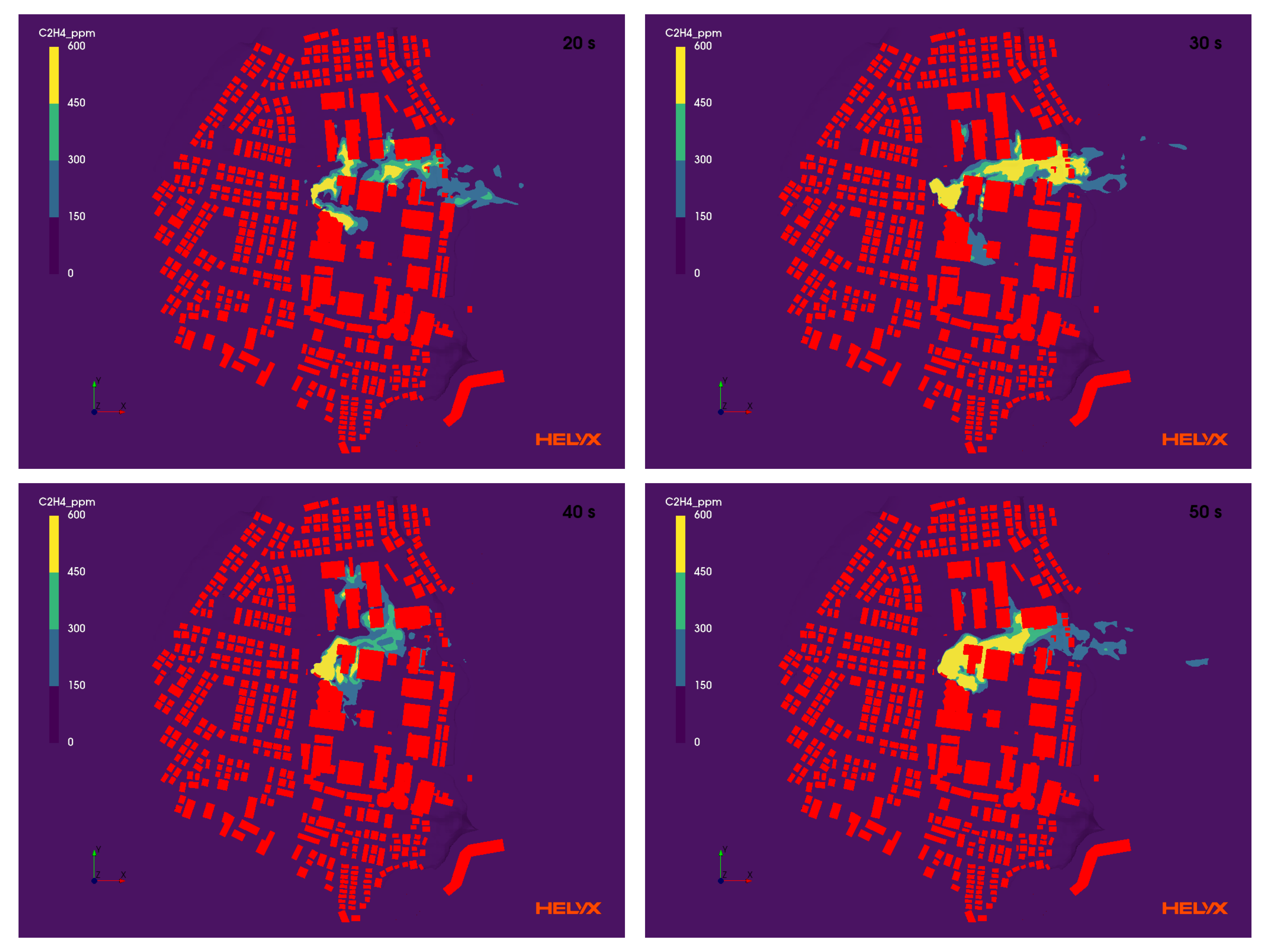
Beyond numerical validation, a possible practical value of AEC simulation lies in its ability to support pollutant dispersion assessment and inform safety-related decision-making. The simulation results can be presented as time dependent and averaged concentration contours above the ground. Those can be used by engineers, architects and autorities to assess air quality against legislations such as the UK Air Quality Standards Regulation 2010 and WHO Global Air Quality Guidelines, which define concentration thresholds associated with potential human health effects.
Conclusions: Proven Reliability for AEC and Environmental Safety
This rigorous validation against the AIJ ‘Case M’ benchmark demonstrates that HELYX is a highly accurate and reliable tool for simulating complex urban pollutant dispersion phenomena. The excellent agreement with experimental data, highlighted by a Global NMSE of 0.02, validates the fidelity of the k-Equation Eddy Viscosity LES model and the robustness of the underlying coupled solver technology.
For engineers in the AEC and environmental safety sectors, this result provides confidence that HELYX can deliver precise, dependable predictions for critical air quality applications. This is a core component of the CFD solutions for the AEC industry provided by ENGYS, enabling users to tackle challenging simulations with the flexibility and power of open-source software. With capabilities for open-source CFD workflow automation, teams can integrate these high-fidelity simulations into their design and assessment processes efficiently.
To learn more about how HELYX can address your specific simulation challenges, contact our team for a consultation.
References
[1] T. Okaze et al. “Large-eddy simulation of flow around buildings: Validation and sensitivity analysis”. In: 9th Asia-Pacific Conference on Wind Engineering (Dec. 2017). DOI: 10.17608/k6.auckland.5630887.v1.
[2] T. Okaze et al. “Benchmark test of flow field around a 1:1:2 shaped building model using LES: Influences of various calculation conditions on simulation result”. In: AIJ Journal of Technology and Design 26 (62 Feb. 2020), pp. 179–184. DOI: 10.3130/aijt.26.179.
[3] T. Okaze et al. “Large-eddy simulation of flow around an isolated building: A step-bystep analysis of incluencing factors on turbulent statistics”. In: Building and Environment 202 (Sept. 2021), p. 108021. DOI: 10.1016/j.buildenv.2021.108021.
[4] A. Krassas et al. “Evaluating numerical models for the prediction of pollutant dispersion over Tokyo’s Polytechnic University campus”. In Journal of Wind Engineering & Industrial Aerodynamics (June 2024) DOI: https://doi.org/10.1016/j.jweia.2024.105789
[5] Department of Energy (DOE). Temporary Emergency Exposure Limits (TEELs) for Chemicals of Concern. URL: https://www.jstage.jst.go.jp/article/jwe/47/3/47_39/_article/-char/en