
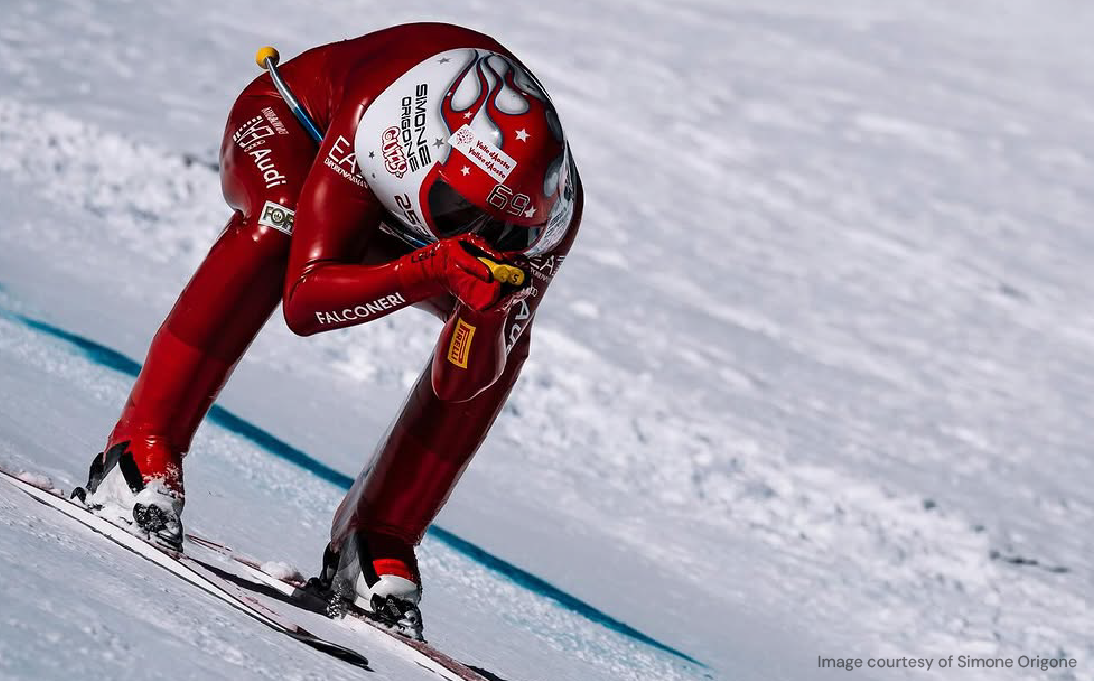
The “Non-Motorized Skiing Speed World Record” measures the fastest speed reached on alpine skis using only natural forces, namely without any mechanical assistance. In particular, the Speed One (S1) record, which is the best class category, is performed with specific speed skiing equipment.
All the periodic events where athletes compete for the world title and attempt record-breaking runs are supervised by the International Ski Federation (FIS) and take place at dedicated high-speed venues such as Vars and Les Arcs in France, Salla in Finland, and Cervinia in Italy. At these extreme speeds, exceeding 250 km/h, performance is no longer driven only by technique and equipment, but increasingly by aerodynamic efficiency.
In this context, aerodynamic optimisation using CFD becomes a key enabler for performance improvement, allowing engineers to quantify drag and guide design decisions with precision.
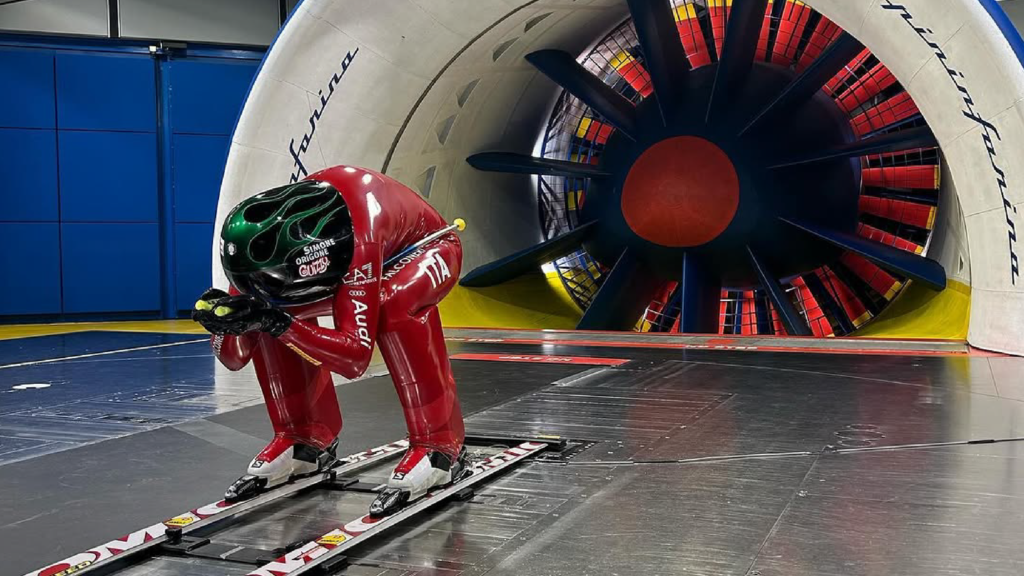
The work presented here focuses on improving the aerodynamic performance of a skier attempting to break the current S1 world record of 255.500 km/h, set in 2023. The adopted methodology combines adjoint-CFD analyses carried out using HELYX with an experimental campaign conducted in the Pininfarina Wind Tunnel in Grugliasco (Turin, Italy).
Simulation methodology
HELYX, the open-source CFD software developed by ENGYS, was first used to compute the airflow and the resulting aerodynamic drag acting on the athlete in the baseline tuck position typically adopted during competition. The CFD case was generated by processing the skier surface geometry obtained in the wind tunnel through a 3D scan. The aerodynamic drag coefficient computed using HELYX was then compared with the values recorded during the first set of experimental tests.
The numerical framework also enabled the calculation of surface adjoint CFD sensitivities, which quantify how a performance metric such as drag responds to small geometric changes. These sensitivities were used to guide shape optimisation and define targeted modifications to the skier’s position and equipment, including helmet and hands positioning.
In the final phase, CFD simulations of a refined configuration were carried out under race conditions to quantify the improvement in drag. Considering wind tunnel measurements as reference, the overall improvement expected during the race is estimated to be around 10%. Key findings from the CFD analysis of the baseline configuration
Key findings from the CFD analysis of the baseline configuration
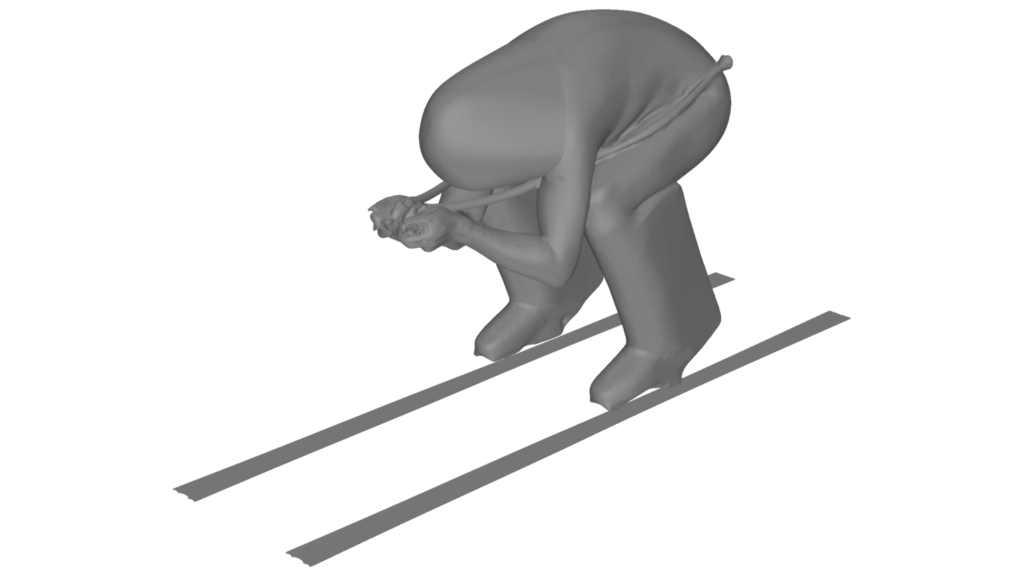
The cleaned-up CAD model includes the full racing configuration, with helmet, skis, poles and wind tunnel supports. A hybrid mesh of approximately 61 million cells was generated using templates, ensuring accurate resolution of key flow features.
To handle turbulence in transient conditions, the Delayed Detached Eddy Simulation (DDES) method was adopted, whilst the Spart-Allmaras (S-A) one–equation eddy–viscosity model was used to model turbulence. As far as boundary conditions are concerned, an “Inlet” velocity condition of 120 kph was set at the inlet surface of the simulation volume, an “Outlet” pressure condition was assigned at the outlet surface, whilst the ground was properly treated to mimic the fixed wall condition of the real wind tunnel.
The simulation ran until 5.62 s and data averaging was performed over the last second. Considering well-stablished best-practices, an adaptive time step strategy was adopted, which utilizes a time increment of 1.636·10-3 s at the beginning of the simulation and a smaller time step of 8.095·10-5 s to better calculate the flow characteristics in the final data averaging stage. Several quantities of interest, including drag and lift, were monitored during the calculation to assess the CFD solution convergence and to start averaging CFD fields and data.
To quantify the accuracy of numerical prediction with respect to the wind tunnel data, the CdA number, that is the averaged overall drag coefficient (Cd) multiplied by the frontal area (A) of the skier’s geometry, was considered. Taking as reference the baseline value of CdA registered during the experimental test, the relative error of the numerical CdA is roughly 3.7%, and, therefore, this major numerical output is very well aligned with wind tunnel tests.
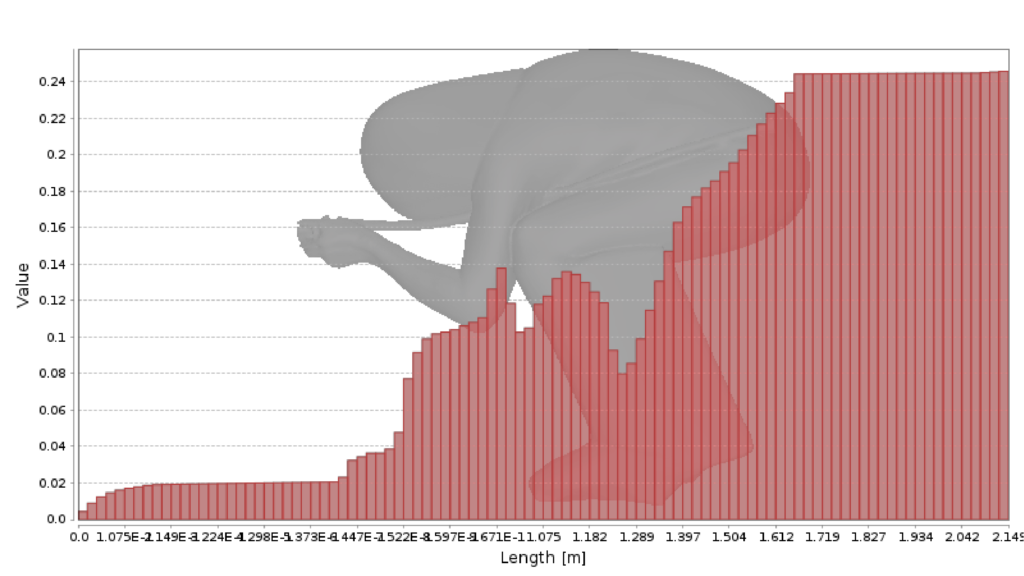
The figure below shows the drag distribution through histograms superposed on skier geometry. These distributions help in understanding the aerodynamic load distribution rather than considering static (i.e., average steady-state) values only.
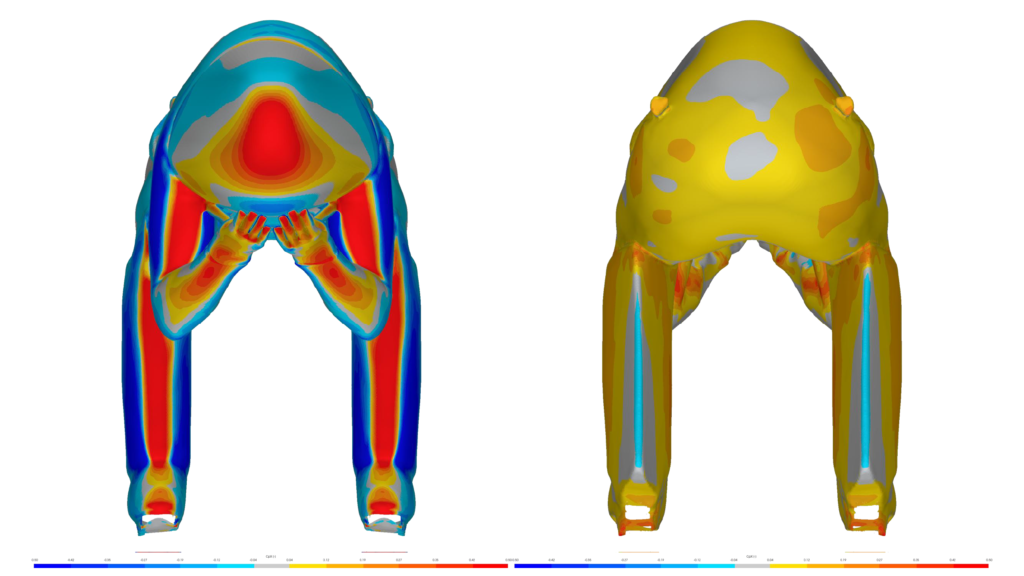
The distribution of the x-component of the pressure coefficient over the skier surface from front and rear views is shown in the figure below. The two images allow us to visualize the areas where stagnation regions generate high pressure on forward facing surfaces, but also where attached flow generates low pressure around rearward facing surfaces. Both mechanisms contribute to the overall drag.
The total pressure coefficient zero iso-surface, colored with the mean value of velocity, is shown in the figure below from a right-rear-upper view.
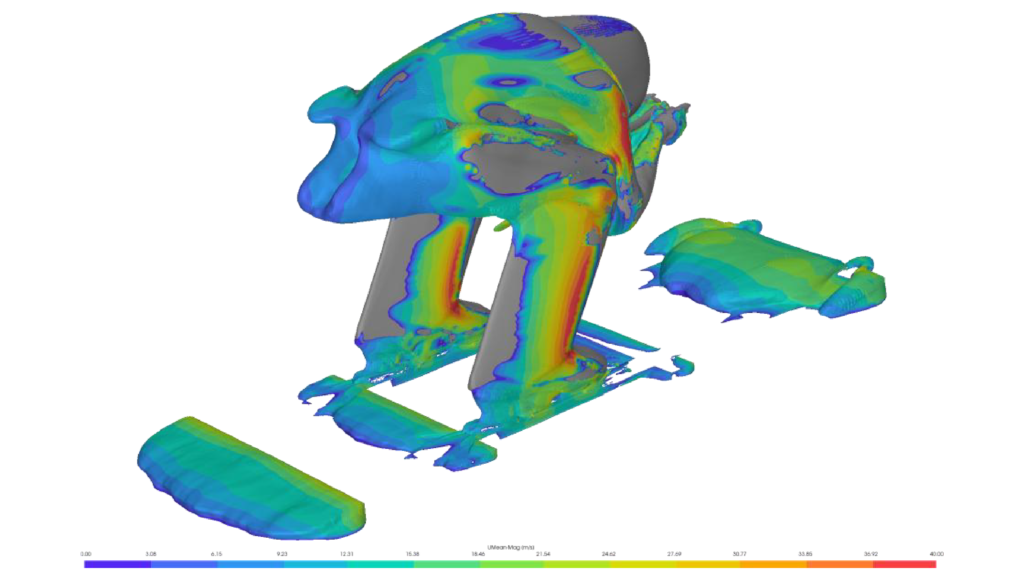
These results highlighted regions of high energy loss in the flow, particularly around the helmet, shoulders and upper limbs, thus increasing drag.
Similar approaches are applied in other aerodynamic optimisation problems, such as in the development of aerodynamic vehicle concepts, where understanding drag distribution is equally critical.
Engineering insights from the adjoint results
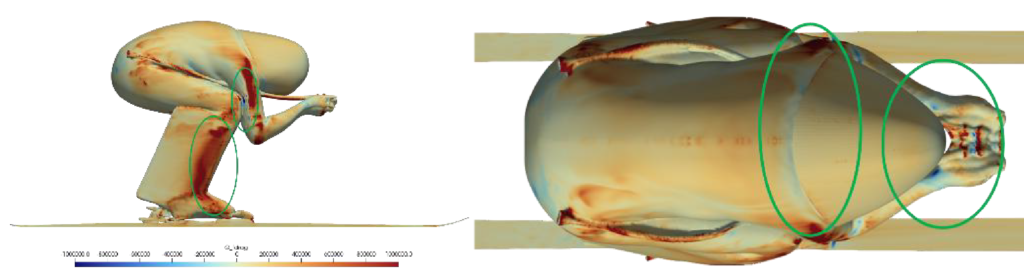
The adjoint analysis provided direct guidance on how to modify geometry to reduce drag. The results indicated that improving alignment of knees and elbows, reducing gaps between helmet and shoulders, and refining hand positioning would lead to measurable improvements.
“The synergy between HELYX CFD and wind tunnel testing proved extremely powerful. Through adjoint analysis, we were able to clearly identify the specific areas of the skier that required deeper investigation during the wind tunnel campaign, allowing us to use our testing time far more efficiently. Moreover, CFD enabled us to extrapolate performance at actual racing conditions, up to 256 km/h, velocities that cannot be reached in the wind tunnel for safety reasons when a real athlete is present.”
Francesco Uffreduzzi, Head of Aerodynamics & Aeroacoustics, Pininfarina Wind Tunnel
CFD analysis of racing conditions
In the last phase of the project, two simulations of the skier under race conditions characterized by a freestream velocity of 256 kph were carried out: the baseline configuration and a second configuration, referred to as the quasi-best configuration, in which a new helmet and skier’s hands position were modeled and implemented. This approach made it possible to quantify the aerodynamic effect of the set of consistent modifications, namely those assessed during the wind tunnel campaign.
To ensure a consistent comparison, the mesh and CFD case settings were kept the same as those used in the experimental-numerical comparison. However, a few conditions differed: the freestream air velocity, the absence of supports for skis, and the boundary condition applied to the ground, to which the same velocity as the freestream speed was assigned. The geometry of the quasi-best configuration is reported in the image below.
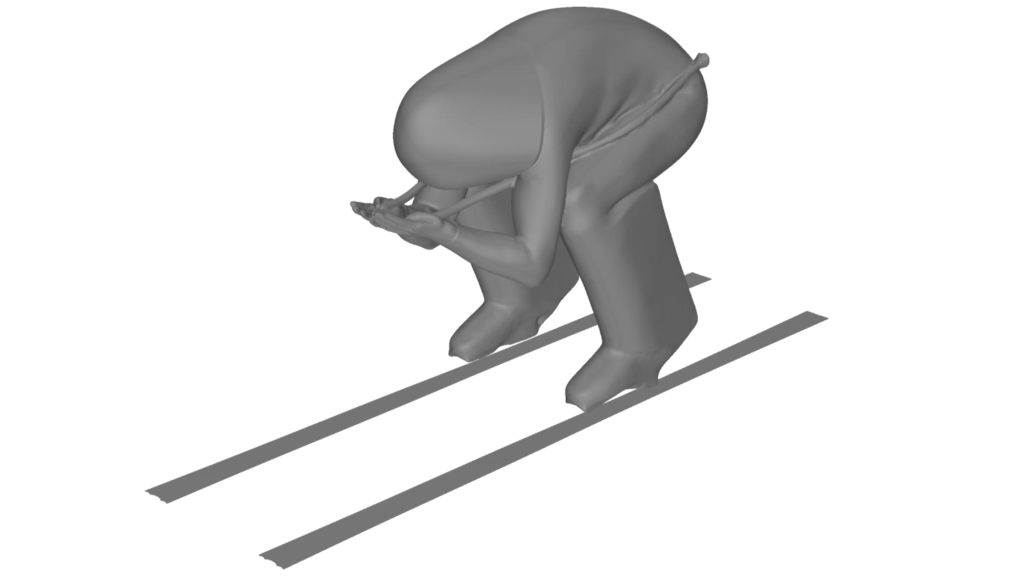
The improvement in terms of CdA computed of the quasi-best configuration with respect to the baseline skier configuration was 10 drag counts (≈4%).
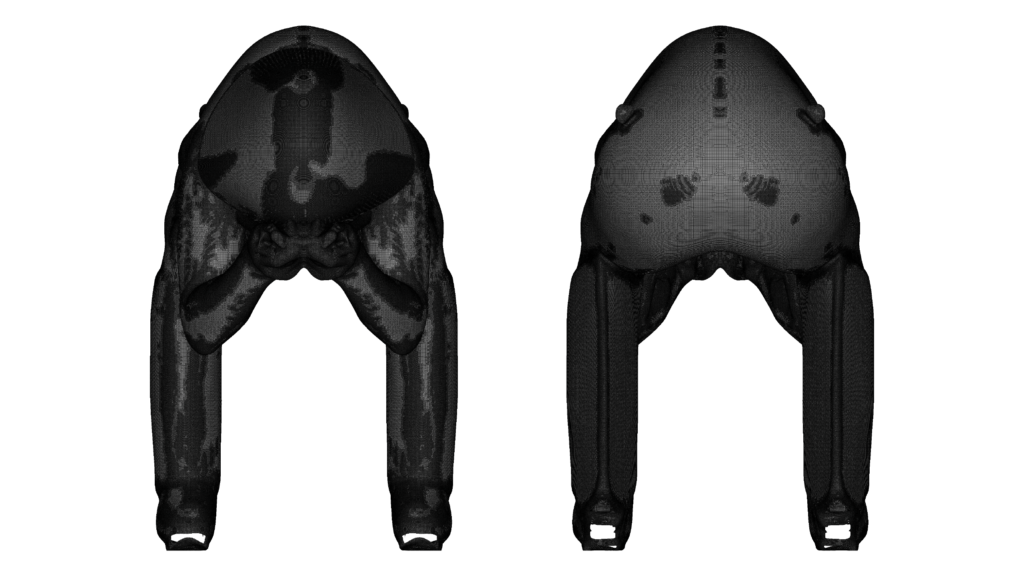
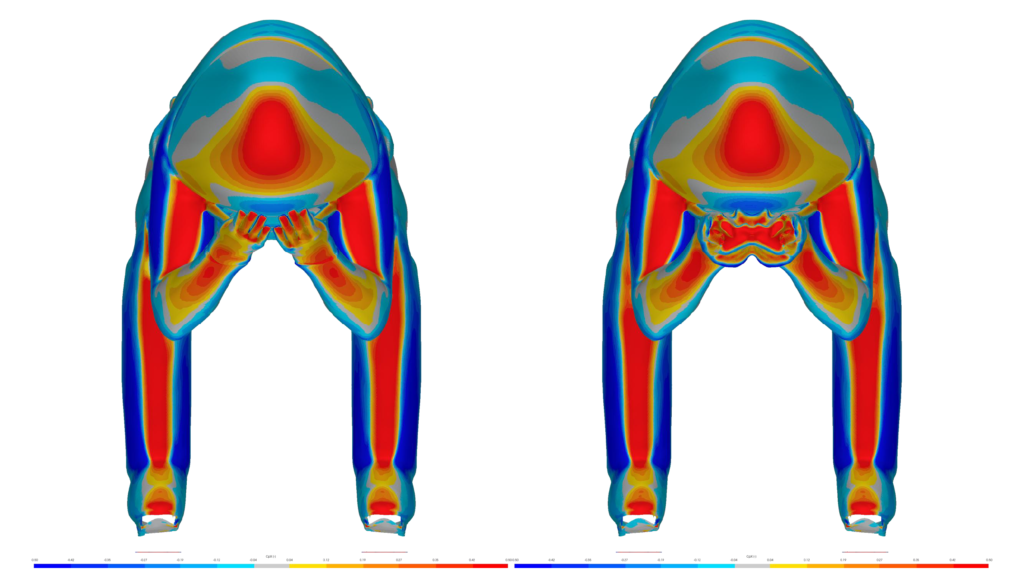
The pressure coefficient x-component distribution for the baseline and quasi-best configuration is reported in the figure below on the left and right side from a front view, respectively. Through these maps, it can be assessed that the surfaces of the top part of the legs, forearms, and hands are subjected to lower pressure intensity due to a better aerodynamic configuration.
The distribution of the total pressure coefficient (CpT) over a vertical plane, longitudinally cutting through the simulation volume at y = 0.0, is shown in the figure below for the baseline (top) and quasi-best (bottom) configurations.
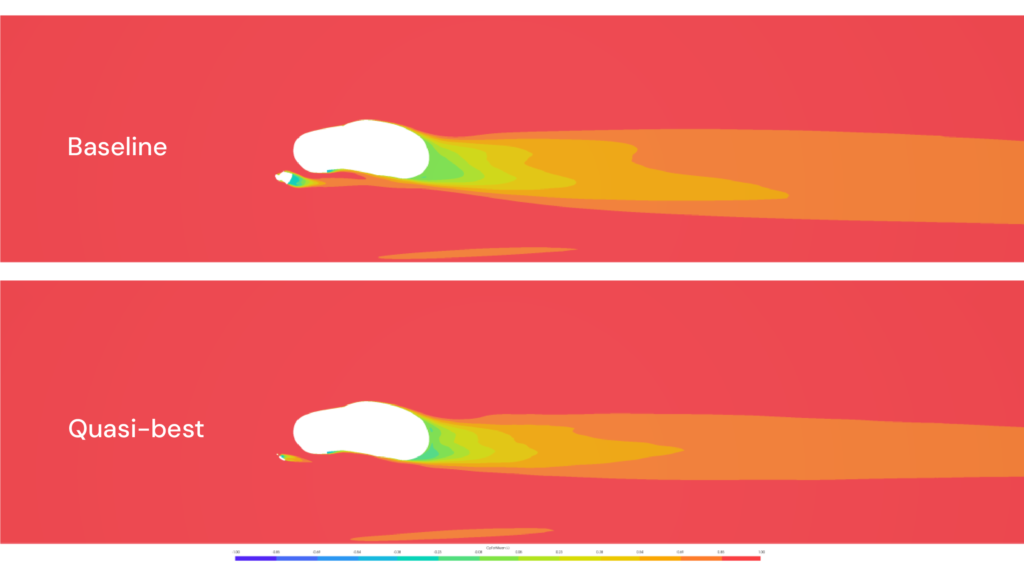
These results confirm the aerodynamic benefits of the modifications identified through CFD and validated experimentally at maximum speed allowed for a skier in the wind tunnel.
Collaboration between Pininfarina and ENGYS
The aerodynamic optimisation workflow presented in this study was developed through the ongoing collaboration between ENGYS and the Pininfarina Wind Tunnel team, combining CFD expertise with experimental aerodynamic testing.
This cooperation has enabled the development of integrated workflows where numerical simulation and wind tunnel validation complement each other efficiently, supporting both aerodynamic analysis and performance optimisation activities.
“The collaboration between Pininfarina and ENGYS, now ongoing for more than two years, has proven to be both solid and highly productive. Built on mutual trust and a strong alignment of expertise, this partnership has consistently delivered tangible results, demonstrating the long-term value of close cooperation between design innovation and advanced engineering simulation.”
Francesco Uffreduzzi, Head of Aerodynamics & Aeroacoustics, Pininfarina Wind Tunnel
Acknowledgements
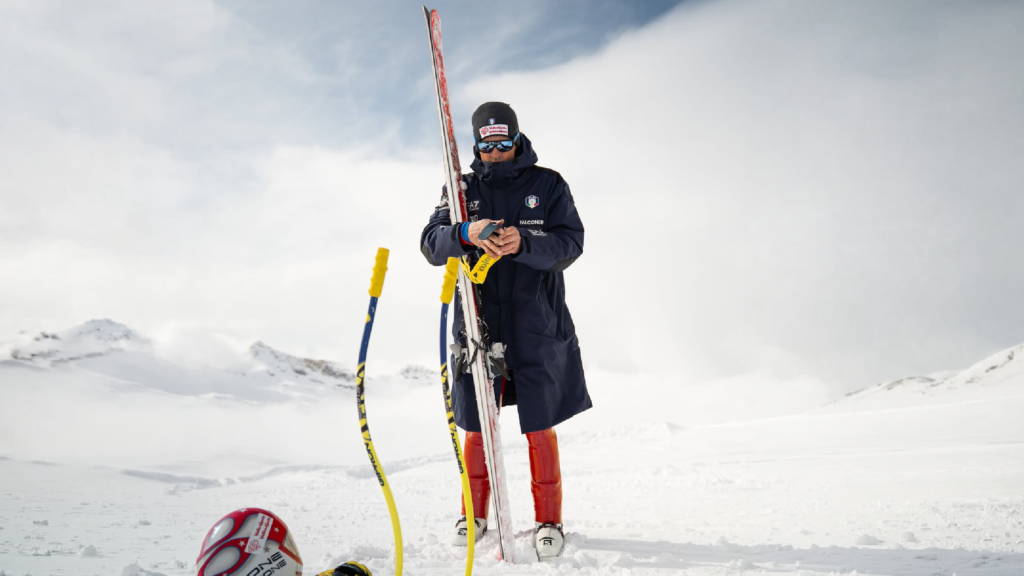
The authors would like to thank Simone Origone for granting permission to publish and disseminate the material related to this study.
Explore HELYX for aerodynamic optimisation
HELYX provides advanced open-source CFD capabilities for aerodynamic optimisation, including adjoint analysis and workflows for complex engineering applications. If you are working on performance-driven design challenges, our team can support you in building efficient and validated simulation workflows.