
Introduction
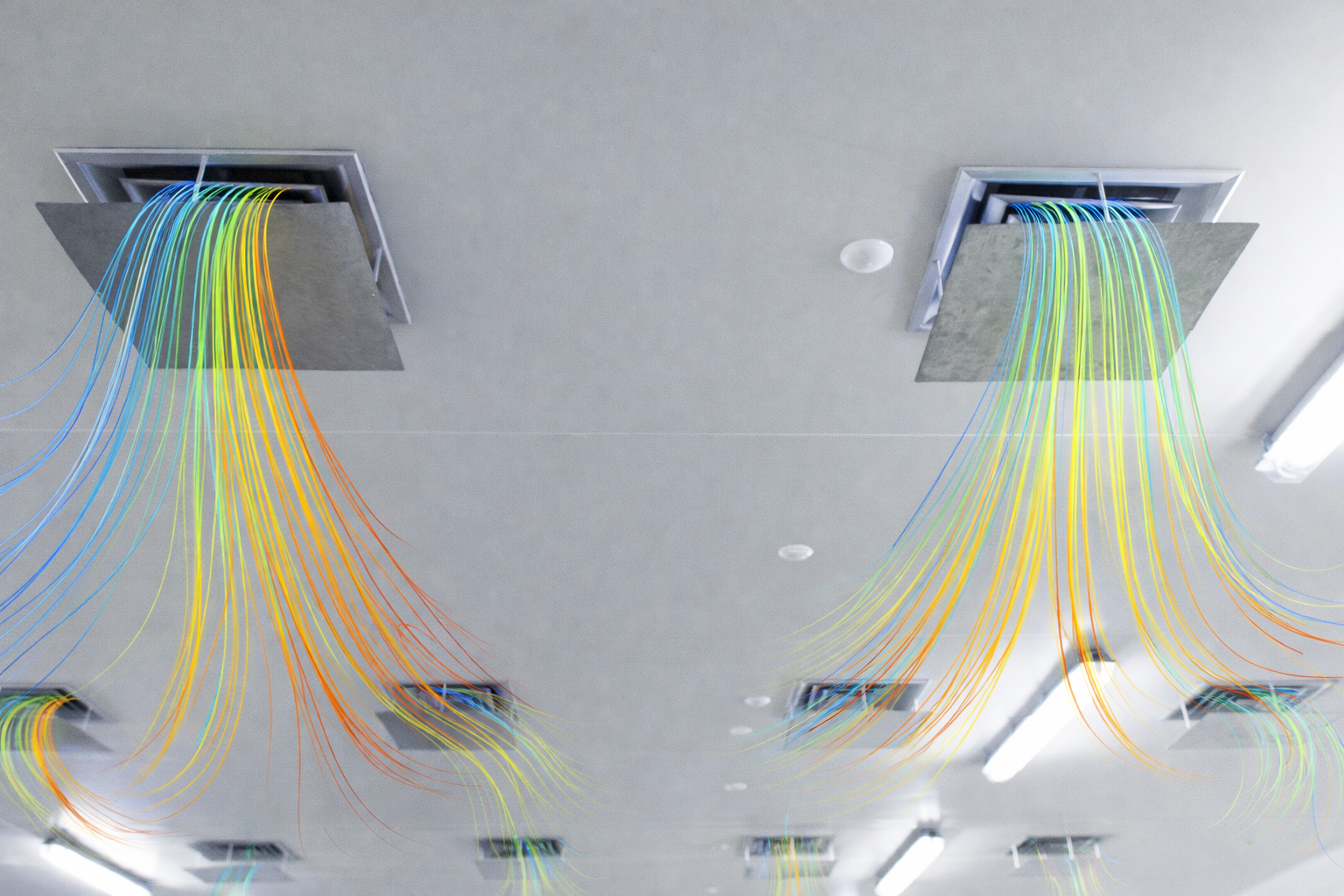
Heating Ventilation Air Conditioning (HVAC) systems have an abundance of applications in today’s world. They keep astronauts alive in space [1], prevent infection in operating rooms by maintaining 25 air changes per hour [2] and preserve artworks in museums by stabilising conditions to 20degC (68degF) and 50% relative humidity all year round [3].
As the demand for HVAC continues to grow, so does the need for accurate CFD modelling to develop efficient HVAC systems. In this article, we will explore the challenges of HVAC CFD simulation and how advanced CFD tools, such as HELYX, can unlock HVAC performance through two real-world case studies.
The challenges of CFD analysis for HVAC
Modelling multiphysics in short timeframes
Unlike many other fluid dynamic applications, HVAC simulations can involve modelling the behaviour of airflow, temperature, heat transfer, humidity, turbulence, pressure, thermal comfort and even the movement of contaminants. Furthermore, HVAC engineers often need to run several simulations to investigate multiple climatic scenarios. This results in batches of highly complex CFD simulations, demanding substantial computing resource and lengthy runtimes.
‘With conventional CFD software you can only run one case at a time without incurring extra costs, which can be substantial, so in general you have to run cases in serial batches,’ explains Shrey Joshi, Managing Partner and CFD Specialist at CFD consulting firm, CFD Solutions. ‘But with open-source cloud solutions like HELYX, we can run several cases in parallel. This means that instead of waiting several days for a bunch of simulations, it only takes about a day, which significantly reduces lead time and means we can meet the tight deadlines of our customers.’
Defining realistic assumptions
Another challenge with HVAC CFD simulation is establishing accurate assumptions and converting these into representative boundary conditions. HVAC studies typically include elements such as doors, windows, walls, floors, internal heat load due to occupants, equipment and lighting – all of which significantly affect the conditions of the local environment and therefore need to be considered before any reliable simulations can be run.
‘You need to account for the amount of heat that leaks through any gaps around windows and doors, the heat transfer coefficients of the walls and the effect of wind or sunlight on the internal temperature of windows. Moreover, heat load from convectors, climate ceilings and floors or humans should also be considered,’ says Joshi. ‘These factors are unique to each case and so must be defined by the HVAC engineer. But once identified, these can be easily input into HELYX when setting up a simulation.’
Quantifying thermal comfort
Thermal comfort is the human perception of the surrounding thermal environment and therefore depends on a myriad of factors. ‘Let’s say the ambient temperature is 25degC,’ explains Joshi. ‘25degC in the sunshine feels much warmer than 25degC in the shade because your body is exposed to solar radiation.’
‘Now consider wearing a jacket or going for a run, you will feel even warmer, but if there is a breeze, you will feel cooler,’ continues Joshi. ‘The temperature stayed the same, but your perception of that temperature has changed. That’s because thermal comfort depends on both environmental factors, like temperature, wind, radiation and humidity, as well as personal factors, such as clothing and physical activity. Accurately quantifying this thermal comfort is probably the biggest challenge with HVAC studies.’
Consequently, organisations such as ASHRAE (American Society of Heating, Refrigeration and Air Conditioning Engineers), ISO (International Organisation for Standardisation) and ISB (International Society of Biometeorology) have published several thermal comfort international standards. The most common are:
- ASHRAE Standard 55 – defines acceptable ranges of temperature, humidity and air velocity
- ISO 7730 – quantifies thermal comfort through PMV (Predicted Mean Vote) and PPD (Predicted Percentage Dissatisfied) models
- ISO 7243 –evaluates heat stress on humans using the Wet Bulb Globe Temperature (WBGT)
- UTCI (Universal Thermal Comfort Index) – biometeorological index for assessing outdoor thermal comfort
- ISO 7933 – determines heat stress on humans by calculating predicted heat strain
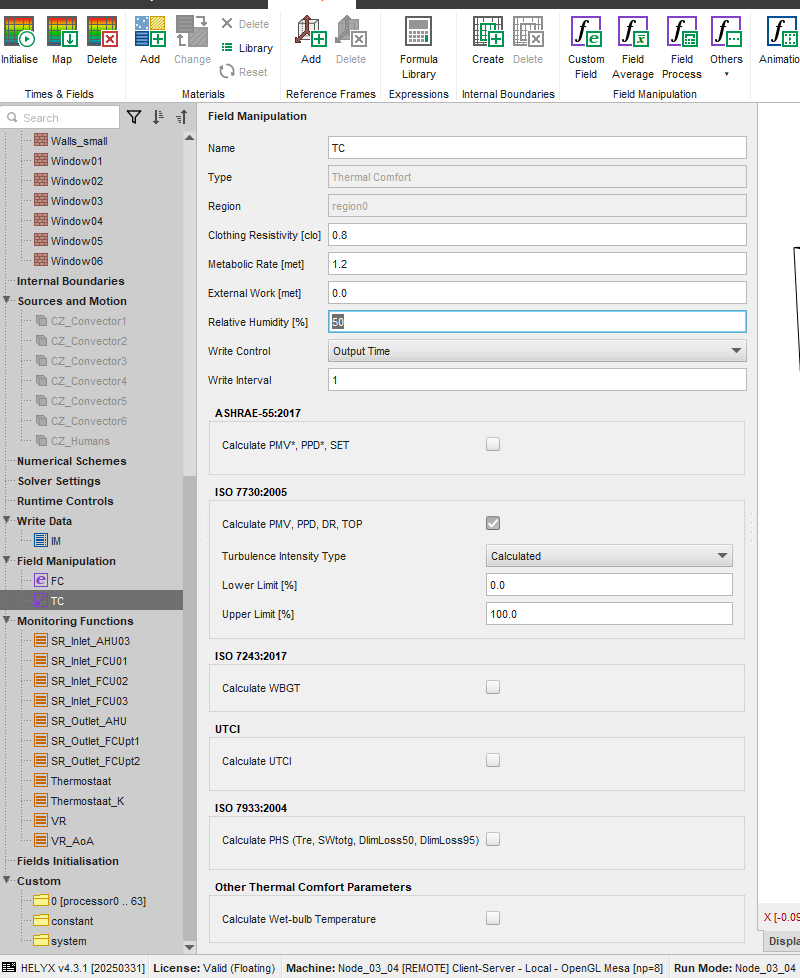
‘Customers will want their HVAC systems to comply with one of these standards where applicable,’ highlights Joshi. ‘Luckily for us, these standards are inbuilt within HELYX, which is not common with CFD software’s. So, we simply switch on the thermal comfort criteria we need, HELYX then calculates and plots the results for us. This saves us a lot of time and effort, as otherwise we would have to create new workflows to include these metrics within our simulations.’
Case study: Enhancing ventilation in swimming pools
The humidity generated by heated swimming pools, combined with the presence of chemicals in the air can result in uncomfortable conditions and potential health risks for swimmers. Therefore, designing a HVAC system which effectively ventilates and improves the thermal comfort of these areas is an essential part of running a successful swimming pool facility.
One such facility approached CFD Solutions who collaborated with Hellebrekers, designers of HVAC systems, and Interland, air distribution specialists. CFD Solutions conducted a detailed evaluation of the new HVAC design using CFD, starting with an in-depth assessment of the performance of the existing ventilation system.
The pool hall featured a couple of air supply grilles located halfway up the rear wall of the swimming pool, which released either hot or cold air depending on the season. However, just next to this supply was an extract which removed air from the room. These inlets and outlets were positioned too close to each other, potentially causing airflow short-circuiting.
Furthermore, to achieve a more uniform distribution of airflow, the square green inlets were replaced with 24 nozzles. As expected, this modification resulted in a much better flow distribution and air mixture throughout the space, enhancing overall ventilation performance. The CFD results confirmed that the nozzle-based design significantly improved the air quality within the facility. It also assisted in selecting the exact angles and throw (velocity) for each nozzle to cover the entire space.
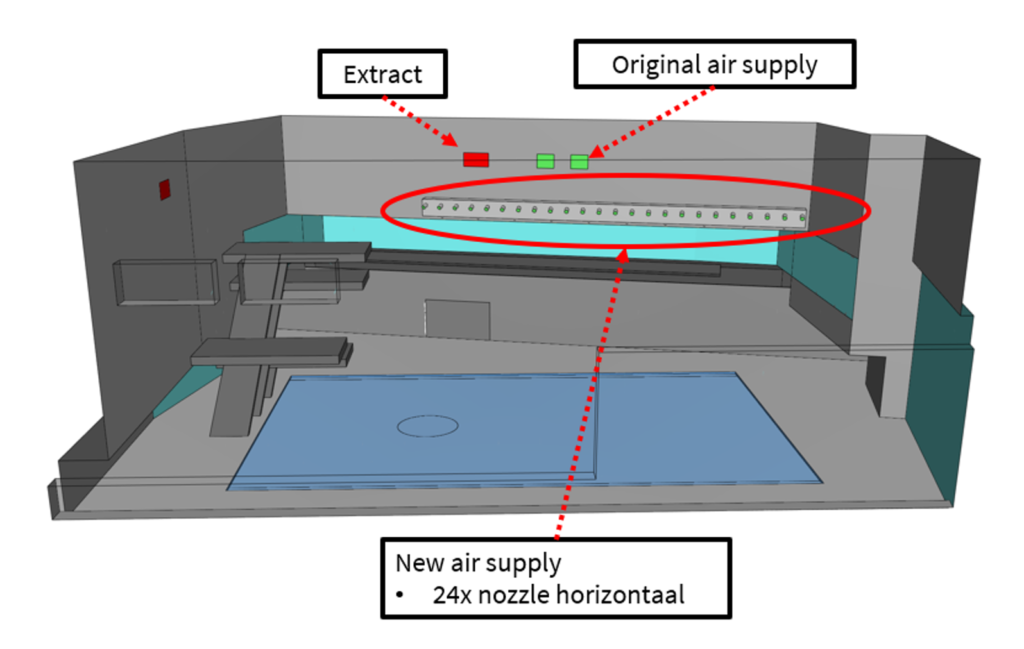
‘With two air supply grilles and an extract grille on the same wall close to each other, we expected the flow to be concentrated in just one region of the pool room,’ reveals Joshi. ‘Moreover, there was a risk of short-circuiting where the incoming air is just taken away by the extract without ventilating the room. We simulated this effect in HELYX and were able to show the behaviour of the flow through streamlines as well as humidity, velocity and temperature distribution.’
‘After analysing the results, we proposed to add a number of nozzles as air supply, that will effectively distribute the flow in the room whilst also minimising the risk of short circuiting,’ continues Joshi. ‘We conducted the simulations again with the new design and discovered that this not only improved ventilation but also dropped humidity by a significant amount.’
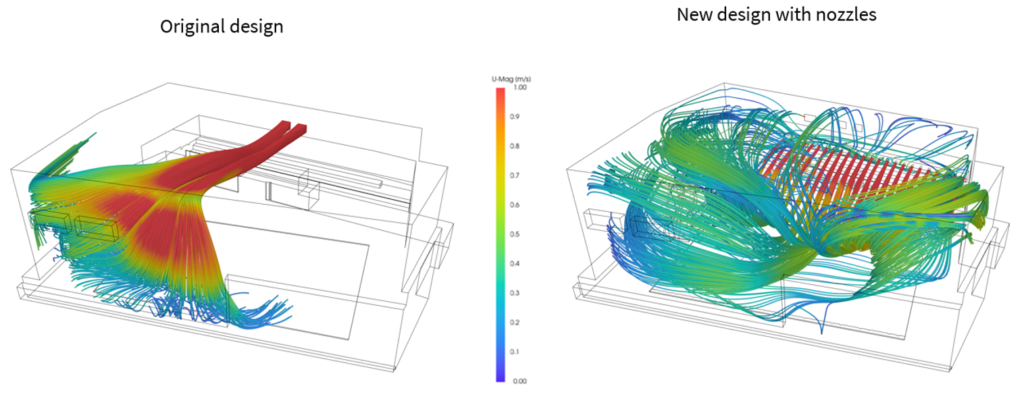
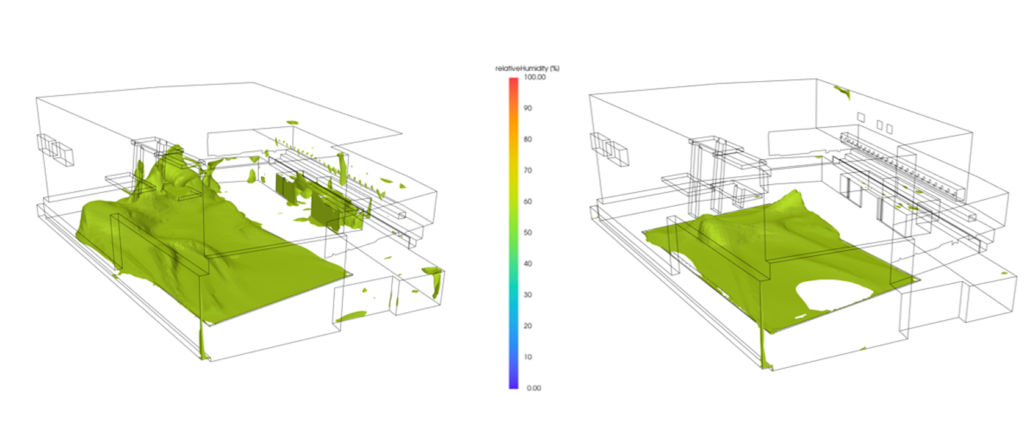
The streamlines in the image above clearly indicate that in the original design, the airflow was concentrated within a limited section of the room. Whereas the new design featuring the nozzle arrangement, results in streamlines that extend across a much larger area, thereby ensuring improved airflow distribution.
This was further confirmed by the humidity iso-surfaces pictured below. As you can see, regions of high relative humidity are confined to the area near the water, which is acceptable from an operational standpoint.
‘Many HVAC consultants come to us with HVAC system designs that are initially driven by space or cost requirements, with little consideration of the actual airflow,’ concludes Joshi. ‘However, by utilising HELYX’s powerful capabilities, we can help them better understand the issues of their current system and develop a better solution, quickly, easily and at much lower cost than other CFD software’s.’

References
[1] 2023. Environmental Control & Life Support System (ECLSS): Human-Centered Approach [Online]. NASA.
[2] 2023. Evaluate and implement operating room airflow setback [Online]. ASHE.
[3] 2.1 Temperature, Relative Humidity, Light, and Air Quality: Basic Guidelines for Preservation [Online]. NEDCC.